Father Jean François (1582-1668)
The Water Science Pioneer
It is based on a geometric and rigorous observation of the landscape as well as on the calculation of volumes. In his major book entitled The Science of Waters published in 1653, he applied mathematics and logic to the study of fountains, rivers and groundwaters.
He is an absolute pioneer by forcefully asserting that the springs and rivers come only from the infiltration of rain and snow into the ground. By defending this vision, he combats the beliefs of his time and validates Bernard Palissy's intuitions. His work marks a crucial step in transforming the search for water into a true technical and scientific discipline, liberated from mystical or supernatural explanations.
Jean-Étienne Guettard (1715 – 1786)
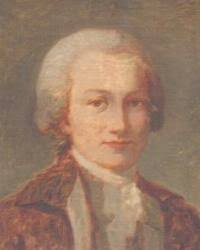
He is an immense naturalist and academician of French sciences. He is the absolute pioneer of geological mapping and the study of subsoil structures in France. He strongly rejects speculation to focus on factual observation.
It is he who carries out the first major studies on the distribution of minerals and types of rocks, laying the necessary physical bases that will later (in the 19th century) allow Darcy and Paramelle to understand precisely how water infiltrates and circulates according to the nature of the terrain.
Pierre Perrault (1611-1680) and Edme Mariotte (1620-1684)
The founding fathers of quantitative hydrology
Finance researcher Pierre Perrault and physicist Edme Mariotte of the Académie des Sciences are the two French scholars who have transformed the study of water into a modern experimental science. By attacking the Seine basin, they unite statistical rigour and physical rigour to definitively solve the mystery of river renewal.
Pierre Perrault published in 1674 a revolutionary memoir entitled De l'origine des fountains. It measures the annual height of the rains and calculates the area of the upper Seine watershed in order to estimate the total volume of water dropped from the sky. By measuring the flow of the river in parallel with floats, it compares for the first time in history the atmospheric input and the actual flow. In 1686, physicist Edme Mariotte validated and masterfully confirmed this work by carrying out even more precise and rigorous measurements of surface speed.
Their numerical calculations amaze the learned world by showing that only one sixth of the volume of annual rains is sufficient to feed the Seine flow over a year. By this simple and indisputable mathematical demonstration, they refute the thousand-year-old theories of Aristotle or René Descartes, who claimed that the rain was insufficient and that the water had to come from internal condensation or from a magical rise of the sea through the interior of the mountains. By establishing the very first experimental hydrological assessment, they prove the crucial role of infiltration and definitively anchor water science in the field of measurable physics. [
Jacques Aymar (1657-1707)
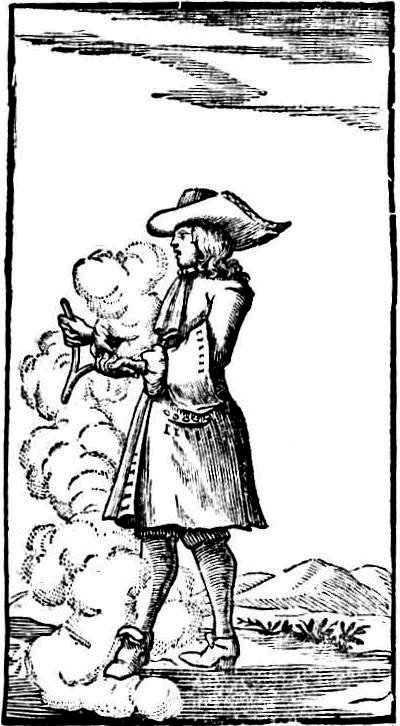
Lyon, July 1692. A smell of blood and wine hovers in the freshness of a cellar on Rue Saint-Denis. A rich merchant and his wife came to be brutally massacred with an axe. Their trunks are empty. The murderers fled, leaving no witnesses, no clues, no leads behind them. The justice of the Sun King is trampling, powerless, facing the horror of double crime.
In the face of the total absence of clues, justice appeals to Jacques Aymar, a humble mason of Dauphiné who became famous for his ability to find water and stolen objects with the help of a coudrier rod.
Bringing Aymar to the scene of the crime, he enters the trance and his wand shakes violently. Following the movements of his piece of wood, he began an unprecedented judicial hunt along the Rhône. He identifies the inns where the murderers stayed and goes back to the Beaucaire prison for 270 kilometres. There, his wand designates a young boss in prison for a minor offence. When questioned, the man confesses the double murder and confirms the exact route drawn by the dowser.
This resounding success pushes Aymar into national fame. Invited to Paris by the Prince of Condé to submit his gift to the scientific elite, the miracle collapses: during rigorous blind tests, Aymar fails lamentably, proving unable to find hidden gold or solve simulated thefts. He is discredited and returned to anonymity.
Jean Nicolas (active in 1693)
The work of Jean Nicolas, La Verge de Jacob or the art of finding treasures, sources, limits, metals, mines, minerals and other hidden things, by the use of the forked stick, presents itself as a technical and practical guide to use the "forked stick" in order to map all that is invisible to the naked eye: gold and silver veins, hidden sources, and even the pillars of land fraudulently moved by neighbours.
This text is one of the most fascinating reference treatises of the Old Regime on rhabdomancy (the old term for baguette research).
The title refers directly to the biblical patriarch Jacob, to whom the esoteric tradition allowed the use of cider branches (noisetier) to make his flocks flourish. This is where the semantic slide to the "width rod" was born.
The Treaty was published in 1693, only one year after the Jacques Aymar case. The whole of Europe is then passionate about the mystery of the wand. Jean Nicolas' book surfs on this immense popular curiosity trying to give a clear method to this practice.
Thomas Welton (active in 1874)
He chose to translate this text into English in 1874 under the title Jacob's Rod and gave Victorian society the taste for French theories of the Great Century, laying the foundation for what would become modern dowsing in England.
Even though he was not a traditional dowser surveying farms with his wand, he actively defended and popularized the idea that a sensitive operator could use a pendulum over a map to locate mines, coal or water sources at a distance.
Martine de Bertereau (1590 - 1642)
The pioneer of mineral and hydrogeological detection
The first French geologist and mineralogist, Martine de Bertereau, Baroness of Beausoleil, travels Europe with her husband, Jean de Chastelet (1578-1645) to open mines and search for water under the reign of Louis XIII. It publishes major technical works to prove the richness of the French basement.
It combines rigorous scientific observation of soils with empirical tools. She studies topography, the nature of rocks, indicator plants, but she also uses the hazel divining rod and complex instruments such as mineralogenic compasses or hydroscope to feel the invisible forces of the Earth.
It is among the first in France to map metal deposits and hidden water sources methodically. Her exceptional expertise in guessing what is underground makes her an indispensable figure in the transition between soil science and wave art, even if the use of her sticks will be worth her being imprisoned for witchcraft under the impulse of Cardinal de Richelieu.