For 15 or 20 cm diameter boreholes requiring 3 inches and 4 inches, the market segmentes very clearly between European technological excellence and value for money very aggressive Chinese manufacturers.
Here a comparison of the best brands in this category, their typical performance and price scales (including the hydraulic block + motor assembly):
The best 3-inch pumps (For narrow tubes Ø ≥ 80 or 90 mm)
The 3-inch pumps are popular for their compactness. They generally have target flows between 1 and 3 m3/h.
Grundfos (SQ/SQS Game) – The ultimate of technology
Performance : Flows up to 3.5 m3/h, massive discharge pressures (up to 200 mCE). It incorporates standard a permanent magnet motor at speed variable, automatic progressive start and protection internal against dry walking.
Scale price: ~750 € to 1,600 € depending on floors and depth required.
Pedrollo (Collection 3SR) - Classic robustness
Performance : Designed with anti-lock floating turbines. Nominal flow from 1 to 2.7 m3/h for heights up to 140 meters. Excellent electric endurance.
Scale price: ~450 € to 750 €.
LEO Group or JIADI (Chinese Marks) – The economic alternative performance
Performance : Copy the architecture of floating turbines. Flows from 1.5 to 3 m3/h with rewindable oil engines. Perfect for a Classic watering or intermittent domestic use.
Scale price: ~180 € to 350 €.

The best 4-inch pumps (the absolute standard Ø ≥ 115 or 125 mm)
It's the queen category. Target flows on these models extend of the 3 to 10 m3/h.
Grundfos (PS 4" all inox) – High-end industrial
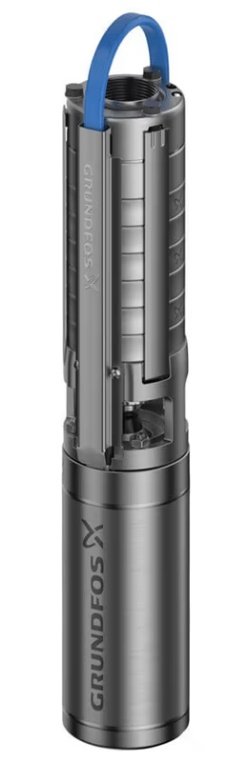 Performance
: Unrivalled energy efficiency on the market (up to 75-78
%. 100% stainless steel design stamped and laser welded.
Ideal if coupled with an external speed switch (VFD) for
a factory or operation.
Scale price: ~900 € to 2 200 € (the three-phase versions of strong power or versions Inox 316 / N are located in the slice High).
Pedrollo (Collection 4SR / 4SR-S) - The Undesirable Against the Sand
Performance : Patented technology of floating turbines in technopolymer (Lexan/Noryl). It is the pump that tolerates the strongest sand concentration in the world without fluctuating (up to 150 to 200 g/m3 of silica). Can push water up to more than 250 meters high.
Scale Price: ~500 € to 1 100 € (Excellent value for money) professional).
Lowara / Calpeda (E-GS) – Endurance for industry
Performance : Designed for continuous 24-hour intensive operation. High energy efficiency hydraulics, very low rate wear of mechanical bearings.
Scale price: ~600 € to 1 300 €.
LWOP / MASTRA (China – SJ / 4SP series) – The Chinese upscale
Performance : CNP offers pump bodies and turbines entirely in cast stainless steel. They offer hydraulic efficiency very close to Italian standards and accept without problem the control by speed variable.
Scale price: ~250 € to 550 €.
Executive summary aid to the decision
Select Grundfos if you look for the maximum long-term energy saving on your electricity bill or electronic features in 3".
Select Pedrollo if your drilling tends to produce some sand or if you want the best compromise of professional reliability at the right price.
Select LWOP or LEO if initial acquisition budget is the priority, for use agricultural or industrial monitoring.
Top of the world leaders in broadband pumps
These brands represent excellence in energy efficiency (BEP), material engineering and long life term.
Grundfos (Denmark – Range SP 6", 8", 10"): The reference absolute
Performance : Flows from 10 to 450 m3/h, tolerance to aggressive water with options in stainless steel 316 (SP-N) and stainless steel 904L (SP-R). Performance hydraulics reached 78-80%, the highest in the market.
Scale price:
6 inches: ~3 500 € to 6 000 €
8 inches: ~7 000 € to 11 000 € (37 kW target configuration)
10 inches: ~12 000 € to 22 000 €+
Capri (Italy – Range E / Desert): The middle mechanical monster karstic
Performance : Flows up to 450 m3/h. Capri does not use sheet metal fine but moulded stainless steel (microfusion) or heavy cast iron. Its semi-axial turbines support the sudden variations in pressure and passage of coarse sediments (rivers) underground fractured).
Scale price:
6 inches: ~€3,000 to €5,500
8 inches: ~6,500 € to 9,500 €
10 inches: ~11 000 € to 18 000 €
KSB (Germany – UPA range): The rigor of public supply
Performance : Specialist in rewindable industrial engines lubricated to water (no oil). Ideal for perfect health security or continuous service with millions of start-up cycles on Dimmer.
Scale price: Equivalent to Grundfos, focused on public procurement and heavy engineering (~4 000 € to 20 000 € depending on the diameter).
The Top Chinese leading manufacturers for broadband pumps
These Chinese manufacturers have their own R&D centres, are publicly traded and design hydraulics that export massively towards global industrial sectors.
LWOP - Southern Pump Industry (SJ) : The pioneer of the "All Inox
Performance : Very clean technological copy of Grundfos. The SJ series covers flow rates from 10 to 240 m3/h. Their wheels and diffusers are in Inox 304/316 laser welded. Hydraulic efficiency flirts with 74-76%, which is excellent for Chinese equipment.
Scale price:
6 inches: ~1,500 € to 2,800 €
8 inches: ~3 000 € to 4 800 €
10 inches: ~5 500 € to 9 000 €
MASTRA - Ruirong Pump Industry (PS 6SP to 10SP) : Endurance Electrical
Performance : This manufacturer made a world name thanks to the robustness its submerged industrial engines. Their pumps of 6, 8 and 10 inches integrate oversized restraint valves and rubber bearings with very low friction. Perfectly adapted to strong hydrostatic thrusts.
Scale price:
6 inches: ~1 200 € to 2 500 €
8 inches: ~2 500 € to 4 200 €
10 inches: ~4 800 € to 8 000 €
LEO Group (Collection 6XR / 8XR) : The export heavyweight
Performance : First Chinese manufacturer to have standardized coupling global NEMA standards on broadband. Their hydraulics axials offer excellent water resistance slightly Turbid.
Scale price : Very close to the rate grid of MASTRA (~1 500 € 8 500 €).
Table comparative synthesis for (Example based on 8 inches / Target 100 m3/h)
If you must make an arbitration on your industrial project between the different market offers:
Make |
Recommended model |
Average price |
Performance |
Strong terrain |
|---|---|---|---|---|
Grundfos |
SP 95-5 |
~13 500 € |
79 % |
Electrical consumption minimum, global reliability |
Capri |
E8P65-4 |
~11 000 € |
75 % |
Indestructible resistance rock and pressure |
CNP (China) |
SJ 95-4 |
~5 000 € |
76 % |
Better ratio quality/price in industrial stamped stainless steel |
MASTRA (China) |
8SP77-5 |
~4 500 € |
71 % |
Engine heavy electric very robust under 6 bar |
Recommendation final for your choice :
For an underground river at 50 -70 meters depth, the choice of industrial reason is Grundfos or Capri if the plant turns H24 (energy cost and risk of breakdown imports more than the purchase price). However, if the budget start investment is locked, option LWOP (SJ series) equipped high-end engine is the most reliable Chinese alternative and the most successful in the current market.
The linear load loss formula (Hazen-Williams)
She allows to calculate pressure loss in meters of water column (mCE) per metre of pipe:

𝐽=10,67×𝑄𝐶1,852×1𝐷4,87
J = Load loss per linear metre (mCE/m).
Q = Flow rate in m3/s (For convert m3/h to m3/s: divide by 3600).
D = exact inner diameter of your discharge column in meters (e.g. for a 4" Sch 40 steel tube, D = 0.1023 m).
C = Roughness coefficient of the material (the more material is smoother, higher C):
Steel Stainless steel or plastic (HDPE): C = 140 to 150 (very smooth, weak (losses)
Steel new carbon: C = 130
Steel old / corroded carbon: C = 100 (losses double with rust)
Example
concrete per 100 m3/h (Q = 0.0277 m3/s) in a steel column
4 inches (D = 0.1023 m) over 100 metres in height:
The
calculation gives about 0.035 mCE of loss per metre. Over 100 meters
column, so you lose 3.5 meters pressure only by
friction.
The singular load losses (Accessories)
Each obstacle on the line creates a loss of pressure. In the middle industrial, the calculation is simplified by applying a length equivalent in metres of right pipe for each accessory:
One foot non-return valve (mandatory on pump) adds the equivalent of 8 to 10 meters of pipe.
One Open isolation valve adds 1 to 2 meters.
One 90° elbow at head of well adds 1.5 to 3 meters.
Rule empirical: For a simple drilling without complex surface network, add generally 10% to 15% in total linear losses to cover accessories.
Calculation HMT (Total Gauge Height)
For control your pump and validate the engine power, you must supply the manufacturer with HMT, which expresses the total pressure that the pump shall provide:

HMT=Hauteur geometric + desired pay pressure + load losses Totaled
Height geometrical: The exact vertical distance between the water in pumping drilling and the highest point of your factory.
Pressure useful: If the factory needs 4 pressure bars on arrival, it is necessary to add 40 meters to the calculation (1 bar, 10 meters).
Losses The result of steps 1 and 2.
Validation of the exact engine power (kW)
One times the flow rate (Q in m3/h) and your HMT (in metres), the net hydraulic power required is calculated as follows:

𝑃hydraulics (kW)=𝑄×HMT367
For obtain the actual electric power of the engine, divide this result by the overall efficiency of the pump (usually between 65% and 75% for industrial models from 6" to 10" :

𝑃engine (kW)=𝑃hydraulics0,70
For Simulate the Total Size Height (HMT) final of installation, take as base the target configuration most likely: an 8-inch pump configured for a flow rate 100 m3/h, installed in an optimal discharge column in 5 inches steel.
In order to realize a realistic calculation for a drilling of less than 100 meters, we will apply the following standard assumptions:
Depth pump installation: 50 meters below ground level.
Level pumping water: 50 meters
Pressure useful surface: 4 bars (or 40 meters of load, standard pressure to power a plant network or a Automation).
Column Stainless steel 5" 128.2 mm) by 80 metres in length.
Accurate calculation of HMT (Total Gauge Height)
With the formula of Hazen-Williams, the loss by friction of water is 0.0328 mCE per metre. For a column of 50 meters, the balance sheet of Pressures are as follows:
Height geometric to be raised: 50,00 meters
Pressure desired surface area (4 bars): 40,00 meters
Losses Linear load: 50 m X 0.0328 mCE/m : 1.64 m
Losses of singular load (15% for accessories): 0.25 metres
HMT Final=50+40+1,64+0.25=𝟗𝟏,𝟖𝟗 mEC
Calculation power of the electric motor
For the 100 m3/h at a total pressure of 91.89 mEC, the calculation of power shall be as follows:
Step A: Net hydraulic power

𝑃hydraulic=100 m3/h×91.89 mCE367=𝟐𝟓,𝟎𝟒 kW
Step B: Real electric power of the engine (Overall increase of 72 %

𝑃engine=25.04 kW0,72=𝟑𝟒,𝟕𝟖 kW
Table final synthesis for your order (pump 8" to 50m)
Parameter required |
Validated at 50 m |
Standard choice of command |
|---|---|---|
Flow (Q) |
100 m3/h |
Item Best Performance (BEP) |
Height Gauge (HMT) |
91.89 mEC (~9.2 bars) |
Pressure total pump output required |
Diameter Hydraulics |
8 inches |
Inserts in 254.5 mm int. steel casing. |
Power Nominal engine |
37 kW (50 CV) |
Engine industrial standard (Safety reserve included) |
Food Electrical |
400 V / Three phases / 50 Hz |
Standard for industrial networks |
Calibration Electrogen group |
≈53 kVA |
60 minimum kVA (with (variator) |
The 37 kW engine (50 hp) is the perfect technical choice. The engine will operate in its comfort zone, which will maximize its duration of life and will optimize your energy consumption.
Choice start mode and generator power
The submerged industrial pumps (particularly in 8 and 10 inches) have heavy electric motors with strong inertia. The choice of electrical cabinet and energy source is crucial to prevent engine burns or mechanical damage to cause of the river's back pressure.
What Start automation choose?
The Speed Variator (VFD / Inverter) – OBLIGATORY:
frequency converter Grundfos CUE 3X380-500V IP55 0.55KW 1.8
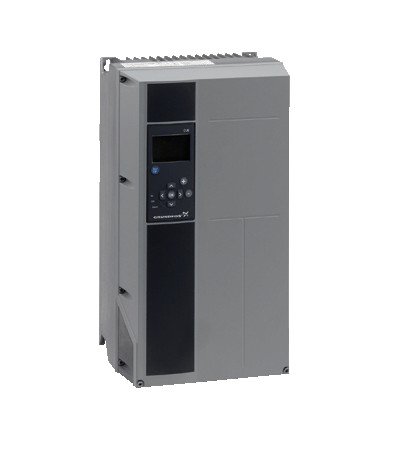
In a drill
classic, we sometimes use progressive starters
(Soft-Starters). But in the case of an underground river under 4
At 6.5 bar pressure, the speed switch is indispensable
[dataviz] It allows a very slow acceleration, but above all a
controlled deceleration (stop ramp). If you cut the
engine at once, the water mass of 100 meters high combined with
6 bars of the tablecloth will go down violently against the valve
non-return. This creates a destructive ram stroke that can
Split your steel tubes or destroy the hydraulic pump. The
Dimmer completely eliminates this risk.
The choice of electric generator (generator group):
generator industrial diesel Kohler SDMO J44K.
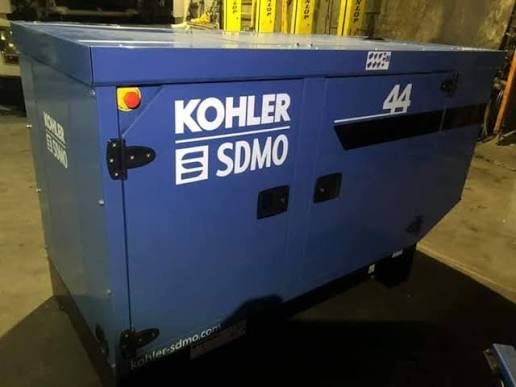
If your factory is not
connected to the high voltage network and that you use a group
its power must be largely oversized.
Grace at the speed variable, the start current peak (Icc) is limited to about 1.5 times the nominal current (6-7 times) for direct startup).
Rule sizing: The generator must do at least 1.5 times the kVA power of the pump motor (e.g. for a 45 kW engine, plan a group of at least 70 to 75 kVA for absorb the harmonics of the variable without caler).
For finalize the setting of your VFD for this pump from 37 kW to 50 meters deep, here are the essential frequencies and settings to program.
These values are critical to protect the hydrodynamic stop (the (e.g. bearing) of the submerged engine and prevent the pump from running empty against the non-return valve.
The Maximum frequency: 50 Hz
It's the nominal frequency of the European electricity grid.
Adjustment 50 Hz
Role : At this frequency, your pump delivers 100 m3/h with its 92 mCE HMT. (N Never exceed 50 Hz, unless the manufacturer expressly validates the engine can be over-crowded because the power absorbed increases to the speed cube and saturates the engine by 37 kW).
The Minimum frequency: 30 Hz at 35 Hz (The most critical point)
The high-power submerged engines ( Franklin or Capriri type) have It is essential to have a minimum rotation speed to ensure that the bearings are lubricated and cooled by water. In addition, cause the 50 meters of geometric height and the 4 bars of the factory, the pump needs a minimum speed for simply successfully open the non-return valve.
Adjustment recommended: 30 Hz (or "cut-off frequency" value) specified on the engine plate, often between 30 and 33 Hz).
Role : If the demand of the plant decreases and the dimmer drops in below this frequency, the pump no longer provides enough pressure to push water to the surface. It then turns "in its juice", the water warms instantly in the body of pump, which can destroy plastic turbines or fluke the Engine.
Security to enable: Configure the variable to switch to standby mode (Sleep Mode) as soon as the required frequency falls below this threshold for more than 5 seconds.
The Initial acceleration ramp (0 to 30 Hz): Ultra-fast
Adjustment : Less than 2 to 3 seconds to go from 0 to 30 Hz.
Role : The engine must reach its minimum lubrication speed on as soon as possible to avoid wear by dry friction of the bearings at start. Once the 30 Hz are exceeded, the ramp can become softer (e.g. 5 seconds from 30 to 50 Hz) to avoid Power calls.
Executive summary VFD parameters for the technician
Parameter |
Value to be entered |
Technical objective |
|---|---|---|
Max frequency (Fmax) |
50.0 Hz |
Nominal flow rate of 100 m3/h Achieved |
Min frequency (Fmin) |
30.0 Hz |
Protection of bearings and engine cooling |
Acceleration ramp |
3 seconds |
Rapid crossing of the area friction critical |
Deceleration ramp |
7 seconds |
Progressive stop for eliminate the stroke of ram |
Seuil standby |
Enabled under 30 Hz |
Avoid zero flow (overheat) |
For ensuring optimum industrial management and complying with standards the integration of these three instruments pressure, level probe and flow meter) is the perfect choice. She allows the pump to be operated in closed loop (PID mode) while protecting the underground river.
Here the recommended technical architecture for these three equipments:
The Pressure sensor (4-20 mA) – For autopilot
transmitter Cerabar by Endress+Hauser
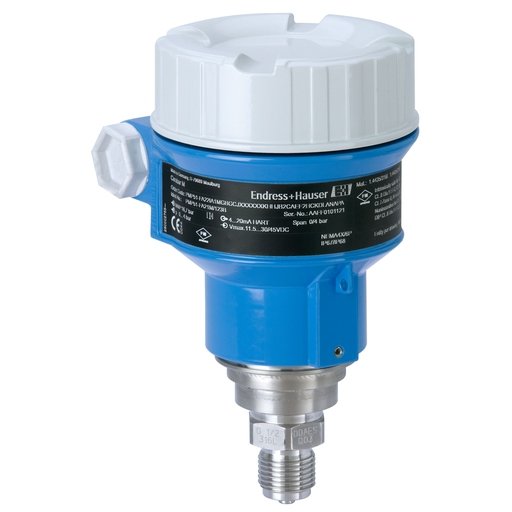
Installed on the surface discharge line, immediately after the head of well and before the isolation valve.
Range recommended measurement: 0 to 16 bar (your maximum working pressure combined with potential springing is ~9.2 to 10 bar, a 16 bar sensor offers the ideal resolution).
Operation : It sends a continuous signal (4-20 mA) to the speed switch. You set your set to 4.0 bar on the display. If the plant consumes less water, the pressure rises; the variable on instantly detects and slows down the pump (to its limit of 30 Hz). If demand increases, pump accelerates to maintain the 4 constant bars.
The Dynamic Level sensor (hydrostatic level sensor) Waterpilot FMX21 of the brand Endress+Hauser.
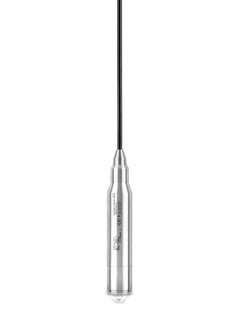
For monitoring the stability of the underground river and avoiding walk dry if the water level falls.
Type equipment: A suspended piezometric probe (cable probe) or a bullying system (imitation hose).
Range measurement: 0 to 60 or 80 metres of water column. The probe is descended inside the steel casing and positioned about 1 or 2 metres above pump (about 48 metres deep).
Security absolute: This sensor shall be connected to the safety inlet of the Speed switch. In case of abnormal drop in the level (by for example under the 45 meters), the dimmer immediately cuts the pump to prevent air or turbulence rock.
The Flow meter (industrial flow meter)
Placed on the surface pipe, on a straight tube section (it is necessary to generally respect a straight distance of at least 5 times the tube diameter before the meter and 3 times after to avoid the turbulence).
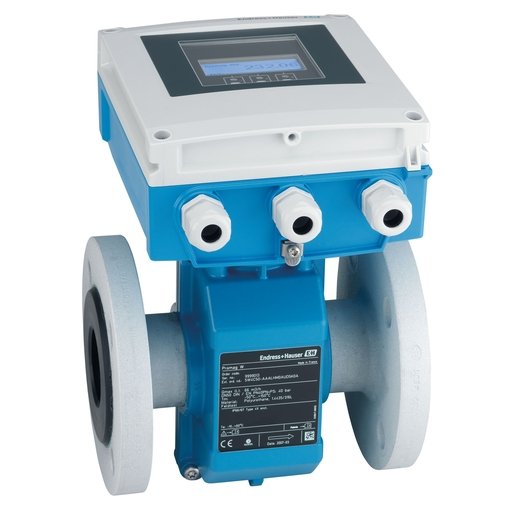
The Recommended Type: Electromagnetic Flow Meter (DN 125/5) inches).
Unlike mechanical helix meters (which wear or block rapidly if the hose water contains microsediments), the electromagnetic flowmeter has no moving parts in the water flow.
He does not cause any loss of load (frost) and offers a Extreme precision to measure your 100 m3/h.
Functionality : It allows both to read the instantaneous flow (m3/h) for check pump performance and total volume (m3) for administrative declarations or consumption monitoring from the factory.
Executive summary from wiring to the electrical cabinet
All this centralized information about the changing cabinet you create a real industrial dashboard:
Instrument |
Output signal |
Main connection |
Automatic role / Dimmer |
|---|---|---|---|
Pressure sensor |
4-20 mA |
Analog input 1 (AI1) |
Speed control (maintenance of 4 bars) |
Level probe |
4-20 mA or Relay |
Analog input 2 or Security |
Emergency stop if river dries |
Flow meter |
Impulsive or 4-20 mA |
Entry logic / Meter |
Registration Volumes and process monitoring |
Here the reference marks to equip your industrial drilling, followed by the rules of art concerning the positioning of valves anti-return to protect your instruments from the 6.5 bar the underground river.
Profile standard technique of drinking water capture for Aquatopia
Resource Targeted: River underground karstic circulating freely under pressure in the rock, with an exceptional natural flow exceeding 500 litres per second, more than 1800 m3/h.
Architecture and drilling casing:
Section upper tubing: Installation of a full tubing column in 304L DN250 stainless steel, with ground thread, descended up to 42 meters deep to isolate perfectly the well of surface infiltrations and ensure the soil stability.
Position pump : Industrial submerged pump safely suspended at 40 meters a depth of two metres above the bottom of the tubing stainless steel, ensuring perfect mechanical protection of the camera.
Section naked lower : Continuation of drilling in diameter of 250 mm without any tubing from the base of the steel column to the intersection final with the underground river, allowing water to flow directly from limestone rock.
Data hydrodynamics : Static level at rest 10 meters from the surface. Level estimated continuous pumping dynamics between 11 and 12 metres from the surface, which maintains a safety load column of Nearly 30 meters of cold water above the pump.
Equipment and hydraulic performance:
Group Pumping : 8" Grundfos SP95/6 6-storey stainless steel pump, equipped with a 30 to 32 kW submerged electric motor.
Performance : For a residual pressure available in drilling head of 50 meters of water column (5 bar), installation delivers flow optimum continuous of about 107 m3/h.
Instrumentation and automation:
Variator speed : Model Grundfos CUE (size for 30-32 kW) installed in ventilated cabinet, continuously adjusting the engine speed for maintain the target pressure of 5 bars.
Measure flow rate : Endress+Hauser Promag W electromagnetic flowmeter in format DN125 (5 inches), with free full passage without moving parts, ensuring a metrological measure insensitive to micro-sediments and without any loss of load.
Monitoring Pressure level : Pressure transmitter Endress+Hauser Cerabar (analog signal) 4-20 mA) on the surface pipe, sending the measurement continuously the frequency switch.
Monitoring Table of Contents : Endress+Hauser Waterpilot FMX21 submerged hydrostatic sensor with oil-free capacitive ceramic cell, measuring precisely the dynamic level during the initial pumping test of 48 hours.
Food self-sustainment : Kohler Diesel Industrial Generator SDMO J44K Delivering a power of 44 kVA (35.2 kW), equipped with a John Deere to electronic regulation, perfectly dimensioned to rescue the entire pumping site.
The reference industrial marks
For the three strategic instruments, it is advisable to work with brands recognized for their robustness in the middle of the process severe:
Sensor pressure (4-20 mA):
The sensor Danfoss MBS 3000 (range 0-16 bars) is the industry's absolute standard hydraulics. Its welded steel cell resists very well brutal overpressure.
WIKA or Endress+Hauser (Cerabar Game) are also excellent choice with ceramic membranes insensitive to wear abrasive.
Probe Hydrostatic level (well):
Endress+Hauser (Model Waterpilot FMX21) or Keller (36XW series). These are stainless steel or titanium suspended probes extremely accurate, with a capillary tube in the cable to automatically compensate for pressure variations surface atmosphere.
Flow meter Electromagnetic:
The range Endress+Hauser Proline Promag W (ideally in DN 125 for your column of 5") is the leader International Water Measurement System.
One excellent alternative with very high durability is the Krohne brand (Gamme Optiflux).
Positioning non-return valves to protect the installation
With an underground river under pressure and a flow of 100 m3/h, The pump shutdown generates a very violent flow reversal. The non-return valves must break this energy to avoid destructive ram blows on surface instrumentation.
He must be installed two Separate valves :
Clapet 1: The foot valve (at pump level)
Position : Screwed directly on the pump outlet head 8 inches, Just below the first 5-inch discharge tube.
Role : As soon as the speed variable starts its deceleration, this valve closes instantly. It maintains the entire column of 50 meters full of water. This prevents the weight of the water does not come down through the pump backwards, which destroy engine bearings and turbines by turbine effect reverse.
Clapet 2: The surface valve (well head)
Position : Installed horizontally (or vertically) on the surface, immediately at the technical exit of your wellhead, BEFORE all your measuring instruments (debitmeter and sensor) pressure).
Role : When the pump stops, this valve separates the drilling from the network from the factory. It collects the return pressure of the factory network (the 4 bars) to prevent this back pressure coming directly hit the drill column.
Order ideal installation on the surface (From the hole exit to the factory) :
Output (Waterproof well head)
Clapet Anti-return surface (Speed fast-closing model type "Silent Check Valve" or double beating to avoid ram stroke) [1, 2]
The Pitching of the Pressure Sensor (Equipped with a shock absorber) pulses or a mini-robinet pointeau to filter vibrations Water) [1]
The Electromagnetic flow meter (Placed on a straight section)
The General plant isolation valve.
.
(FORAGE) : STEEL TUBE Ø 323.9 mm (12")
│
▼
┌──────────────────────────────────────────────┐
│ HEAD SPANISH PUITS (Concrete anchored flange) │ ◄── Output câbles (Pomp & Level probe) via IP68 tow press
└──────────────────────────────────────────────┘
│ (Steel output 5" - Ø 141.3 mm)
▼
┌──────────────────────────────────────────────┐
│ CLAPET SURFACE ANTI-RETURDAY (Elastic) │ ◄── Blocks pressure returns and blows belink
└──────────────────────────────────────────────┘
│
▼
┌──────────────────────────────────────────────┐
│ FIGURE PRESSURE CAPTOR (0-16 bars) │ ◄── Isolation point valve + Transmitter 4-20 mA Danfoss
└──────────────────────────────────────────────┘
│
│ ◄── [Recorded distance 5 x DN = 625 mm minimum straight tube]*
▼
┌──────────────────────────────────────────────┐
│ DEBITTER ELECTROMAGNETIC (DN 125) │ ◄── Measurement of debit instantane and volumeses
└──────────────────────────────────────────────┘
│
│ ◄── [Recorded distance 2 x DN = 250 mm minimum straight tube]*
▼
┌──────────────────────────────────────────────┐
│ VANNE NETWORK ISOLEMENT │ ◄── Valve to butterfly or operculum to isolate completelyèing plant
└──────────────────────────────────────────────┘
│
▼
[Network] 4 bars)
*Note : These right pipe distances are not necessary if you use the Endress+Hauser Promag W flowmeter with option "0 x DN".
Procedure (first start)
The first start of a pump 37 kW in a river underground under pressure is a critical phase. If she's wrong it can defuse the hydraulics, create a wave of impact or damage turbines with last rock residue.
Here the mandatory protocol to be applied step by step:
Step 1: Electrical and sealing checks
Isolation check : Check the isolation of the 4G16 mm2 motor cable by the megohmmeter before watering.
VFD settings : Make sure the maximum intensity is tightened to 73 A, the minimum frequency at 30 Hz, and the ramps configured (3s) acceleration, 7 seconds at deceleration).
Locking : Check tightening of shaft head anchor bolts waterproof in concrete slab.
Step 2: The first start "Closed surface valve"
Unlike a submerged pump must always be started with its surface discharge valve almost fully closed (allow a slight opening of about 10 to 15%).
Verification of the meaning of rotation : Launch manual low speed pump (35 Hz). Watch the sensor pressure. If the pressure does not rise at all, the engine turns to reverse (invert two phases on the variable).
Pressure progressive : Accelerate the pump to 50 Hz via the dimmer, always with Bracketed surface valve. The pressure will rise rapidly to display to defeat the 50 meters of water column and stabilize the line.
Step 3: Opening and switching to automatic mode (PID)
Hunting air pockets: Open the surface valve very slowly. The air trapped in the 5-inch column will be expelled. Let the pump spit out the water for 10 to 15 minutes at moderate speed. Water must be perfectly clear.
Dynamic level measurement : Watch the screen of your hydrostatic level probe. At 100 m3/h, check that underground river level remains stable above the pump (close to 50 metres).
Regulation activation : Put him down. manual mode speed variable in automatic mode (Regulation PID). Adjust the pressure set of the Danfoss sensor to 4.0 bar.
Modulation test: Close and gradually open valves on your network factory. Observe the behavior of the variable: it must cause to fluctuate engine frequency (between 30 Hz and 50 Hz) and change the flow rate on the meter to maintain your 4 constant bars.
.
Here the list of thresholds Digital Security essential to program directly in your dimmer speed (VFD) to protect 100% autonomously your pump from 37 kW and the entire drilling:
Security against dry operation (thermal & hydraulic protection)
Even if you operate an underground river, a sudden collapse or blockage of aspiration by rock debris may defuse the pump.
Source signal: Probe hydrostatic level (4-20 mA) at 48 metres.
Seuil Low alarm: Water level < 46 meters (4 meters above the crepine) pump suction).
Action dimmer: Immediate emergency stop with DRY RUN fault code Dry).
Timing : 1 second. No automatic reset, human inspection is mandatory before restarting.
Security against zero flow operation (Overheating)
If the plant closes all its valves and the dimmer remains blocked to its minimum frequency without going to sleep, the pump will turn in its juice and water will boil in the turbines.
Source signal: Internal variable frequency or flow meter (4-20 mA).
Seuil for detection: Frequency ≤ 30 Hz for more than 10 seconds OR Flow < 5 m3/h at 50 Hz.
Action dimmer: Switching to Sleep Mode. The engine stops clean. It will automatically wake up as soon as the sensor pressure will detect a drop in surface pressure below 3.5 bars (proof that the plant consumes again).
Protection against electrical overload (locking current)
If a piece of limestone crosses the liner and comes to nail the pump turbines, the intensity will rise instantly.
Source signal: Measure Internal intensity of the variable (Amperes).
Seuil Overcurrent: I > 77 Amperes (i.e. ~105% of the nominal intensity of 73 A).
Action dimmer: Immediate electronic breakout (Freewheel stop / Trip).
Timing : 0.5 seconds. Protects the engine from immediate fencing.
Protection against subload (Coupling Out)
If the engine shaft breaks or discouples from the hydraulic part, engine runs in vacuum. The variable then consumes very little current, which may mask the problem.
Source signal: Measure internal engine current or torque.
Seuil Subload: I < 35 Amperes at 50 Hz (less than 50 per cent of load) normal).
Action dimmer: Stop and safe with UNDERLOAD / Routture fault code mechanical.
For an industrial installation of this scale with a pump 37 kW (50 horsepower) and a generator of 60 kVA, feeding is compulsory in three-phase alternating current.
The international voltage standard required for this configuration is on 400 Volts (Triphas) at a frequency of 50 Hz.
Specifications electrical installation:
Tension nominal: 400 V (between phases) / 230 V (between phase and neutral).
Frequency : 50 Hz (this is the Official electric standard in force at Gabon).
Intensity (Nominal current): A pump of 37 kW under 400 V consumes about 70 at 75 Amperes in continuous speed.
Intensity on start: Through theCabinet Speed Variator Electric (VFD) included in your budget balance sheet, the start-up current will be Clear. There will be no peak of brutal intensity (no blow of electric ram), which protects the winding of your motor CNP pump and avoids calating the generator by 60 kVA.
Specification Electrical cable technique (Recall):
Since the current is ~75 Amperes and the drilling is deep, your submerged cable 16 mm2 Of east copper perfectly dimensioned to withstand this intensity under 400 V without falling linear voltage, even if the pump descends to more than 100 meters deep.
Executive summary for the programmer of the electric cabinet
Default type |
Trigger threshold |
Timing |
Type of stop |
Resetting |
|---|---|---|---|---|
Dry walking |
Level < 46 m |
1 sec |
Judgment Rampe |
Manual only |
No flow / Watch |
Frequency = 30 Hz |
10 sec |
Judgment Rampe |
Automatic (if P < 3.5) bars) |
Overload (Block) |
Intensity > 77 A |
0.5 sec |
Freewheel |
Manual only |
Subload (Cash) |
Intensity < 35 A (at 50Hz) |
3 dry |
Judgment Rampe |
Manual only |
The technical and electrical file of industrial river drilling underground is now Total complete and secure.
Instrumentation industrial brand for high performance drilling represents an important investment, justified by the accuracy of the regulation and protection against scrapping of equipment.
Here theprice scale Market information (HT) for selected high-end equipment:
Sensor Industrial Pressure (4-20 mA)
Destined surface pruning for PID control of the dimmer.
Danfoss MBS 3000 (0-16 bars) : 150 € to 250 €
WIKA / Endress+Hauser (Cerabar range): 250 € to 450 €
Note : The gap is due to the integration of a top ceramic membrane range on the Cerabar series, ideal if river water underground abrasive fine particles.
2. Hydrostatic level probe (Suspendue in well)
Calculated for a measuring depth of 50 to 60 metres, including cable Armoured suspension and barometric compensation capillary tube.
Endress+Hauser (Waterpilot FMX21): 1 100 € to 1 500 €
Keller (Series 36XW) : 900 € to 1 300 €
Note : The price varies according to the exact length of the factory operated cable (the price integrates stainless steel/titane probe and waterproof technical cable indissociable).
3. Electromagnetic flow meter (Gross Industrial Flow - DN 125)
The cost includes steel detection cuff (the 5" tube) with internal insulating coating and electronic converter Deported (or compact) calculation with display.
Endress+Hauser (Proline Promag W 300 / 500) : €5,800 to €7,500
Krohne (Collection Optiflux 2000 + IFC converter): €4,500 to €6,000
Note : The Promag W Andress+Hauser is in the high range if you choose the exclusive technology option "0 x DN", which allows save space for straight pipe lengths on the surface.
Budget global surface instrumentation
For fully equip your automatic control cabinet (Pression + Level + Flow), an envelope must be provided total material between 6 000 € and 9 500 € tax excl. (excluding installation and electrical connection) remaining on leaders sector.
Budget full power management cabinet (30kW)
For drive and protect a pump from 30 kW (50 hp) operating under 400V three-phase, the electrical housing shall be assembled in industrial painting workshop. This is not a question of single plastic housing, but a metal cabinet self-ventilated (often classified IP54 or IP55) incorporating the power and digital security protections.
The envelope Budget for cabinet complete electric ready to place segment according to the mark of the main equipment (variator):
Cabinet IP65
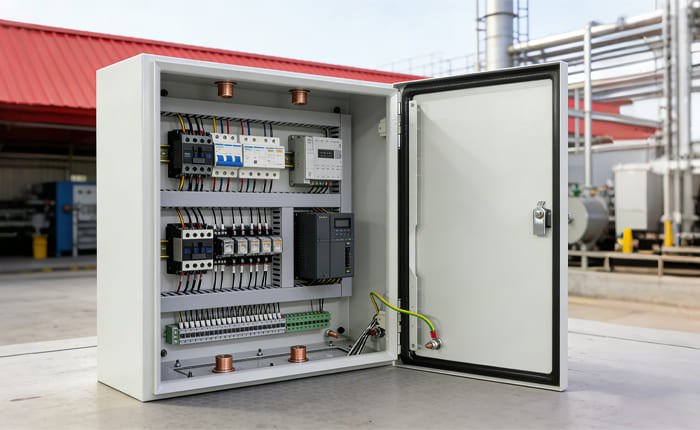
Option European Premium (Base Schneider Electric Altivar Process ATV630/650 or ABB ACS580): €4,500 to €7,000 € excluding VAT
Justification : Variables of this range include advanced communication maps, a native management of pumping profiles (PID curves), filtration of harmonic networks, and safety functions mechanical thrusts (such as Safe Torque Off).
Here's the analysis to do the good engineering choice betweenATV630 andATV650 for your underground river:
1. Why the range Altivar Process (ATV600) is ideal
These two models are part of of the "Process" series Schneider Electric, specially developed for fluid management and pumping Industrial. Unlike standard variators, they integrate features directly modelled on your need: [1, 2]
Algorithms Native pumping : Monitoring the pump curve, protection against running Dry without fluid sensor and acceleration ramp to preserve the stainless steel turbines of your Grundfos SP95/6. [1, 2]
Regulation Advanced PID : The variable insert native block loop processing analog 4-20 mA from your pressure sensor Danfoss MBS 3000. He adapt the engine speed from 30-32 kW continuously to guarantee your 5 constant bars in mind. [1, 2]
2. The game: ATV630 vs ATV650 for your installation
The choice between the two depends Only where you will install your equipment and the type of outer envelope desired:
The option Altivar ATV630 (IP21 Index): To be integrated into cabinet
The principle: This Dimmer is in "nude chassis" format. It is designed to be fixed inside a protective envelope.
The ideal configuration: It's the most common choice. You buy a cabinet industrial electrical waterproof IP65 (on base, steel or polyester), and you mount itATV630 on the bottom plate of the cabinet next to your circuit breakers, terminal breakers and your thermal filtration (ventilators). [1, 2, 3]
The option Altivar ATV650 (IP55 Index): Ready for the field
The principle: This variator already has its own waterproof casing and reinforced, resistant to water projections and dust No additional cabinet.
The ideal configuration: For a power of 30-32 kW, Schneider Electric market itATV650 directly integrated into the factory in wall control boxes or compact, ventilated cabinets. If your pumping room is very wet or small, it avoids you having to design and cable the full electric cabinet from A to Z yourself
Option Economic / Industrial Chinese (LWOP Base, INVT, or IMO): 1 800 € to 3 200 € excluding VAT
Justification : The wardrobe uses a powerful Asian brand dimmer for basic frequency variation, but with software interface less advanced and more standard signalling components.
This which is included in this cabinet price:
The envelope material: Steel cabinet with forced ventilation system and filters dust control (indispensable because a 30 kW VFD emits dust continuous heat).
The head of line: High capacity general magnetothermic circuit breaker (~100 A) + Overvoltage protection (parafouder).
The Digital Security: Security relays, phase control relays (cut everything if network loses a surface phase) and relay plate for Centralize 4-20 mA signals from your sensors.
The interface Man-machine (IHM): Touch control screen or console carried out in front of the cabinet so that the operator can read the pressure, the flow and modify the instructions without opening the doors on.
Review Total financial resources of the project (Hors Forage & Pipeterie)
In combining the 8" pump (37 kW), complete instrumentation and the power cabinet, here is an estimate of the purchase budget equipment for your installation (scenario 100 m3/h at 50 meters) in depth):
Expenditure item (HT equipment) |
Chinese Option (CNP / MASTRA) |
World Premium Option (Grundfos / Capri) |
|---|---|---|
Group Electropomp 37 kW |
~4 500 € |
~13 500 € |
Complete Instrumentation (Pression, Level, Flowmeter Endress + Up) |
~6 000 € |
~8 500 € |
VFD electric cabinet 30 kW |
~3 500 € |
~5 500 € |
Submerged cable Specific (60 meters of 4G16 mm2) |
~600 € |
~600 € |
TOTAL ESTIMATED BY THE OPERATIONAL EQUIPMENT |
~14 600 € excluding VAT |
~28 100 € excluding tax |
Scale Electric Group prices (60 kVA / 48 kW)
For this industrial power, the group is equipped with an engine Multi-cylinder diesel (usually Perkins, Cummins or FPT Iveco) cooled by water, mounted under a soundproof hood resistant to weather (minimum IP23).
Procurement of a group Nine (Prime labels: SDMO/Kohler, Caterpillar, Pramac): 12 000 € to 16 000 € tax excl.
This which is included: Soundproof cover, integrated fuel tank 12h to 24h), the digital controller and the Electronic Precision Voltage Control (AVR).
Procurement Group Nine (Economic Alternative / Assembly Marks): 7 500 € to 10 500 € excluding VAT
This which is included: Often equipped with licensed Chinese-designed engines (like Lovol or Yangdong) with standard alternators. They also integrate the AVR, but the availability of parts Long term replacement can be more complex.
Procurement an Automatic Source Inverter (Separate ATS Box): 800 € to 1 500 € HT
Role : This box external switch automatically the supply of the cabinet of the pump on the unit as soon as it detects a shutdown of the network The factory.
Procedure written first start (for your electrician)
This procedure is to be printed and strictly followed on the day of the commissioning to avoid damage to the pump or sensors.
Phase A: Controls off (to be done the day before)
Measure Isolation: Control the isolation of engine windings via cable 4G16 mm2 aid a megohmmeter under 500V DC. The value shall be greater than 20 million.
Sense cables: Check that shielding of instrumentation cables (sensors) 4-20 mA) is correctly connected to the weight of the cabinet (side only) to eliminate pests.
Monitoring Mechanical: Ensure that the concrete mass of the wellhead is dry and the anchor bolts of the watertight plate are tightened to couple.
Phase B: The first turn of the key (90 per cent closed surface valve)
The butterfly valve on surface must be almost closed to create a artificial back pressure and prevent the pump from packing at cause air bubbles in the pipe.
Set Under tension of the cabinet: Activate the general circuit breaker. Check that the screen Dimmer lights without defects and the three sensors (Pression, Level, Flow) show consistent values at rest (e.g.: flow rate = 0, level = 50m, pressure = 0).
Test (Manual Mode):
Start the pump in manual mode at a very low forced frequency (32 Hz).
Observer The Danfoss pressure sensor on the surface.
If The pressure rises immediately: The direction of rotation is correct.
If the pressure remains at zero after 5 seconds: Stop everything. Cut the general diet and reverse two phases (U and V) on the output terminal of the dimmer.
Mounted speed: Relaunch the pump and get it up to 50 Hz (always valve Broken). The pressure must stabilize at a high value for closing (maximum HMT).
Phase C: Automatic Opening and Switching (PID)
Hunting Air: Open very gradually the surface valve to purge the air from the 5" column. Let the pump flow for 15 minutes. The water measured on the Krohne or Endress+Hauser flow meter shall become perfectly clear.
Verification of the tablecloth: Control on screen that the dynamic level captured by the probe hydrostatic remains stable and does not descend below the alarm threshold critical (46 m).
Activation plant regulation : Switch to AUTOMATIC mode. Enter value of target set of 4.0 bars.
Test modulation: Simulate consumption in the plant by opening large valves. The dimmer must accelerate the engine instantly to compensate for the drop in pressure. Refurbish valves: the pump must slow down to 30 Hz and then switch clean to Watch Mode (Sleep) after 10 seconds if the flow is zero.
Programme Industrial Preventive Maintenance
This planning allows to anticipate hydraulic drifts, to protect your instruments and avoid a sudden interruption of supply in water.
Each week (Maintenance operator)
Statement of magnitudes: Record the flow rate (𝑚3/) and intensity (𝐴) maximum frequency (50 Hz). Increased intensity indicates a start of mechanical friction or blocking.
Inspection visual: Check the absence of water leaks or leaks at the cable and shaft head flanges Waterproof.
Filters of the cabinet: Clean or blow air filters from the electric cabinet (a 30 kW overheating variable will be safe). Each month (Maintenance Technician)
Test of the Electrical Group: Turn the 44 kVA group empty for 15 minutes, then perform a load test (pump on the group) for 30 minutes to remove the Diesel engine. Check oil and coolant levels.
Monitoring level: Check the consistency of the hydrostatic probe relative to the rest (static level of the underground river).
All 6 months (Expert / Electrician)
Cleaning flow meter: If your Krohne or Endress+Hauser electromagnetic model is not not equipped with the self-cleaning option, remove the cuff if water is very incrusting to clean electrodes (never use abrasive metal object, only a soft cloth).
Tightening Terminals: Check the clamping of all power connections in the cabinet (the 4G16 mm2 cable of the engine undergoes micro-vibration which can loosen the terminals of the variable, creating arcs electric).
Measure Isolation: Test engine isolation at the megohmmeter again for monitor the aging of the cable duct in the drilling.
Form Production Tracking (Printable / Excel)
This dashboard is the best diagnostic tool. If flow lowers while the frequency remains at 50 Hz, this is the sign that pump turbines start to wear out due to sediment the river.
FORAGE INDUSTRIAL PRODUCTION – MONTHLY MONITORING
Month
: / Year : 2026
m3/h @ 50 Hz
Date |
Time |
Index Meter
|
Instant Flow
|
Frequency VFD
|
Intensity Engine
|
Pressure Surface
|
Level Water |
Visa Operator |
|---|---|---|---|---|---|---|---|---|
Example |
08:00 |
124 500 |
102 |
48.5 Hz |
69 A |
4.0 bars |
49.2 m |
Jean M |
01 |
|
|
|
|
|
|
|
|
05 |
|
|
|
|
|
|
|
|
10 |
|
|
|
|
|
|
|
|
15 |
|
|
|
|
|
|
|
|
20 |
|
|
|
|
|
|
|
|
25 |
|
|
|
|
|
|
|
|
31 |
|
|
|
|
|
|
|
|
Section
Observations / Incidents of the Month:
(Note
safety triggers, network shutdowns,
operating hours on the 44 kVA generator or
cleaning operations of the cabinet).