Spiritual and Sacred Meaning
Christian purification: The water of the Jordan where Christ was baptized sacralizes the element. In the Middle Ages, the Church "Christianized" the ancient pagan springs by dedicating them to saints (the miraculous fountains in Brittany).
The Ganges in Hinduism: This river is a living goddess (Ganga). Bathing there cleanses the believer of his sins and breaks the cycle of reincarnation.
The Oasis in Islam: In sacred texts, Paradise is often described as a garden crossed by streams of living water, a strong image for peoples living in arid regions.
Establishment of sacred buildings
Finding most megaliths, Romanesque churches, cathedrals or mosques on underground rivers, geological faults or aquifer flows shows that water springs are at the heart of sacred architecture and geobiology.
For the former builders (as for Henri Vincenot and his companions at Le Devoir), the location of a sanctuary was not random. Groundwater plays a role both physical, vibratory and spiritual.
By analysing the plans of ancient shrines, geobiologists and dowsing find disturbing geometric and physical constants.
Underground rivers most often pass on a corner of the sacred building but also under:
In the Churches: Baptism and Christianization
Christian architecture, particularly Romanesque and Gothic, literally "coffered" the ancient sacred sources of pagans.
Many large cathedrals (such as Chartres or Notre-Dame du Puy) have a crypt built directly above a Celtic well or resurgence.
The water in the basement directly fed the baptismal vats. Being baptized above a living vein connected the new Christian to the dynamics of universal life.
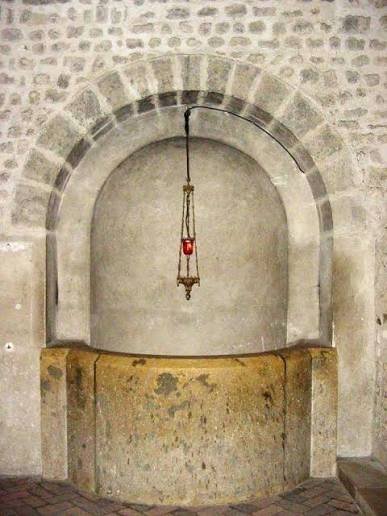
On the ground of the nave lies the famous Chartres labyrinth, a 13th century circular work that pilgrims walked barefoot and which probably served as an amplifier because it was positioned above a geological fault and an energetic "vortex" linked to water currents, fourteen according to historical dowsing...
In the Mosques: Ablutions and the flow of energy
The relationship with groundwater is equally fundamental in traditional Islamic architecture.
Ablution fountains (Meydan): Located in the centre of the mosque's courtyard, they are often linked to a complex system of capturing underground sources or rivers. The ritual cleansing of the body is done with "living" water, which has not seen the sun and is extracted directly from the bowels of the Earth.
Many historical mosques in the Persian and Ottoman world have been erected on oasis areas or underground canal networks (qanats). The positioning of the Mihrab (the niche indicating the direction of Mecca) sometimes coincides with major land-based convergence points created by water.
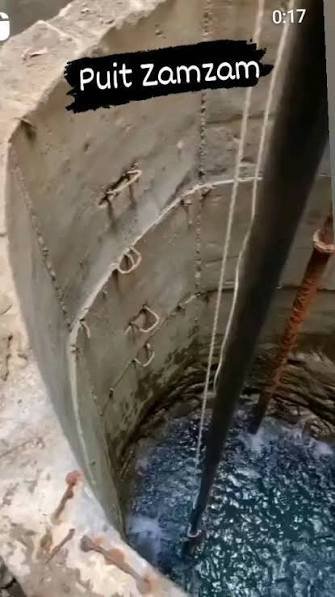
The well has never tarred over the centuries despite the influx of pilgrims and its water has high concentrations of calcium, magnesium, potassium and sodium and a high level of bicarbonates (about 366 mg/L), facilitating digestion.
Telluric currents: The friction of groundwater flowing through the rock faults generates low electrical currents and micro-magnetic anomalies on the surface.
The cosmo-telluric antenna: Masters used these invisible streams as energy amplifiers. The church or mosque acts as an "acupuncture needle" placed on the Earth: the building captures the energy of water in the basement (telluric) and throws it towards the sky (cosmic) through the verticality of bell towers, domes or minarets.
India
Varahamihira (505-587)
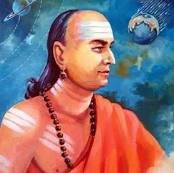
India has a very long tradition of dowsing, mentioned in some ancient Vedic treaties (such as the Brihat Samhita of Varahamihira in the 6th century, which devotes entire chapters to the search for groundwater through the observation of vegetation and termites. Scientific approach.
Traditional water researchers
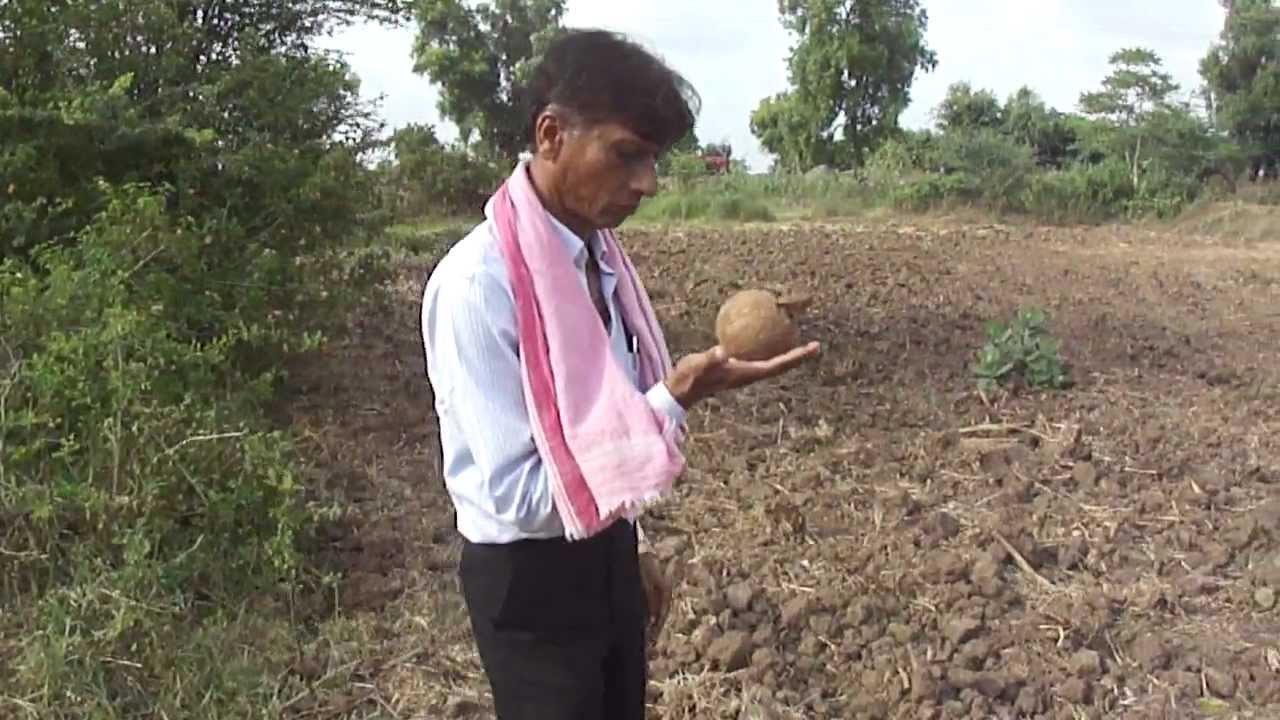
For scientists, it is only the ideomotor effect. This effect refers to unconscious and involuntary muscle movements produced by the body in response to a thought, expectation or suggestion... In other words, it is not the wave of water that makes the coconut move but the dowser himself, without it being accounted for.